



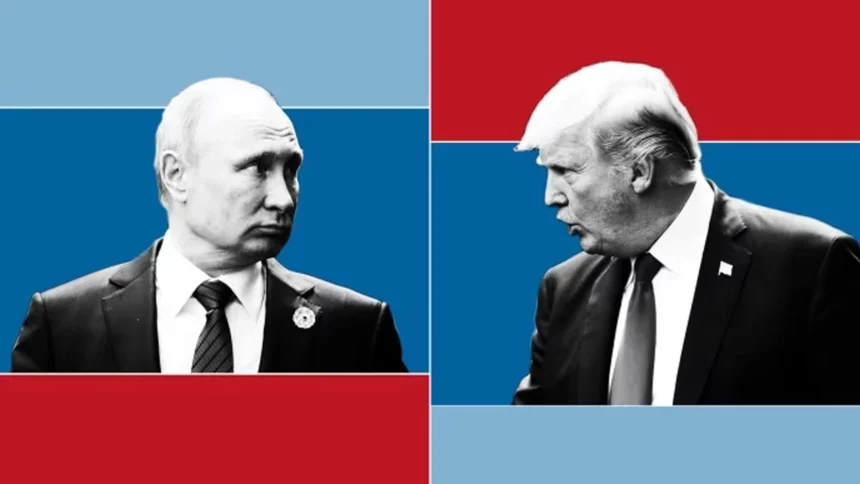
U.S. President Donald Trump’s new National Security Strategy has been welcomed in
Moscow, where the Kremlin said the document is “largely consistent” with Russia’s vision.
The 33-page report argues that Europe is facing a civilizational erosion and notably does not
frame Russia as a threat. Instead, it prioritizes countering foreign influence in the U.S., ending
mass migration, and rejecting what Washington views as EU censorship.
While several EU officials criticized the strategy’s language, saying it echoes Kremlin
rhetoric, Russia responded positively. Kremlin spokesperson Dmitry Peskov called the
changes a positive step, while noting that Moscow would continue reviewing the document.
The report accuses the European Union of undermining U.S. efforts to end the war in
Ukraine. It also argues that Washington should work to re-establish strategic stability with
Russia, a move it claims would help stabilize European economies. The strategy further
celebrates the rise of patriotic European parties and warns that Europe may become
unrecognizable within two decades.
European reactions were pointed. Germany’s foreign minister said issues like freedom of
expression do not belong in a security strategy. Poland’s prime minister reminded Washington
that “Europe is your closest ally, not your problem”.
Beyond Europe, the strategy signals tougher action against drug-trafficking vessels and says
the U.S. may consider a possible military intervention in Venezuela. It also calls on Japan,
South Korea, Australia, and Taiwan to increase their defense spending.
Democrats in Congress warned that the strategy could harm America’s global standing.
Representative Jason Crow called it “a disaster for America’s position in the world”, while
Gregory Meeks said it breaks with decades of values-based U.S. leadership.